
Ankle Pain
Mr Billy Jowett | Consultant Orthopaedic Surgeon
Expert Diagnosis and Surgical Treatment in Southampton, Portsmouth, Chichester and Jersey
Expert Ankle Pain Specialist and Private Ankle Surgeon
As a private ankle surgeon and ankle pain specialist serving Southampton, Portsmouth, Chichester and the South Downs area as well as Jersey, I understand how frustrating it can be when your ankle simply doesn’t feel right. Whether you’ve experienced an ankle sports injury and the pain or instability hasn’t settled or you have developed persistent ankle pain that significantly impacts your daily activities, exercise routine, and overall quality of life, I am able, in most cases, to explain the underlying cause and provide you with options to resolve your symptoms.
In my private foot and ankle clinic, I see patients with ankle problems ranging from acute ankle ligament injuries, through those with injuries that do not appear to be healing properly, to patients with chronic pain with or without instability. What many people seeking an ankle injury specialist don’t realise is that ankle pain often has multiple contributing factors, and successful ankle pain treatment requires accurately identifying the underlying cause – whether that’s cartilage injury, ankle impingement syndrome (trapping of inflamed soft tissues), tendon damage, instability of the tendons or a combination of these conditions. Chronic ligament injuries usually present with instability, but ongoing instability can lead to cartilage damage and therefore also pain.
Understanding Your Ankle Symptoms
Your ankle is a complex joint that must balance mobility with stability, bearing 1.5 – 5 times your body weight when walking (depending on speed), whilst allowing the intricate movements needed for walking, running, and jumping. The ankle has a complex relationship with the joints in the foot (of which there are usually 16 (excluding the joints in the toes themselves)), so there are therefore a number of areas where things can ‘go wrong’ and cause pain. Problems with ankle ligaments, tendons, or cartilage, can cause a variety of symptoms depending on the underlying problem. It is important to be aware that problems in the joints below and just in front of the ankle (the subtalar, talonavicular and calcaneocuboid joints) may be causing the pain that you might think is coming from your ankle.

Activity-related anterior ankle impingement (trigger position)

Clinical presentation of anterior ankle pain
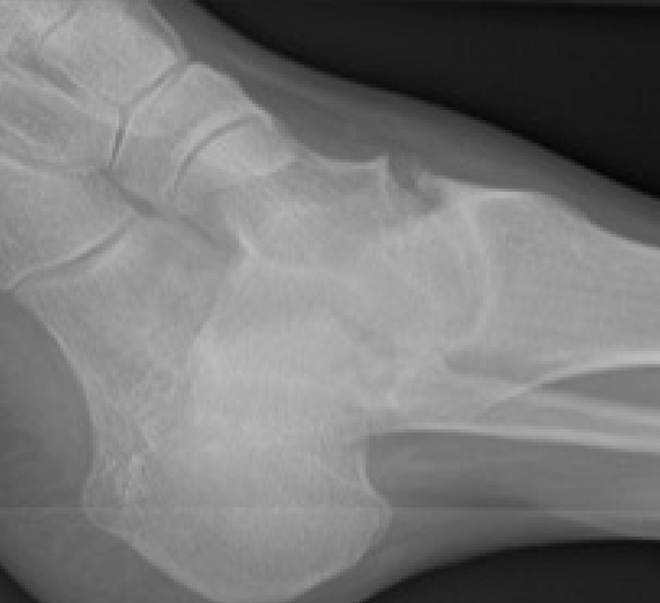
Anterior ankle impingement on X-ray (bone spurs / osteophytes)
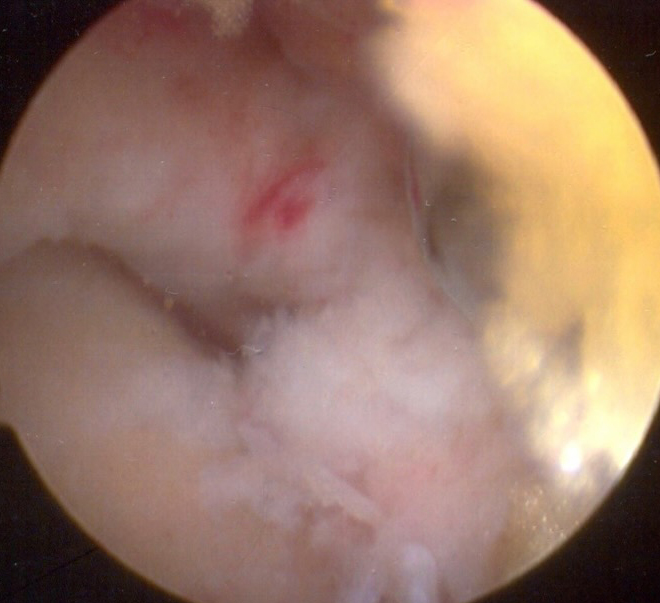
Anterior ankle impingement seen during arthroscopy
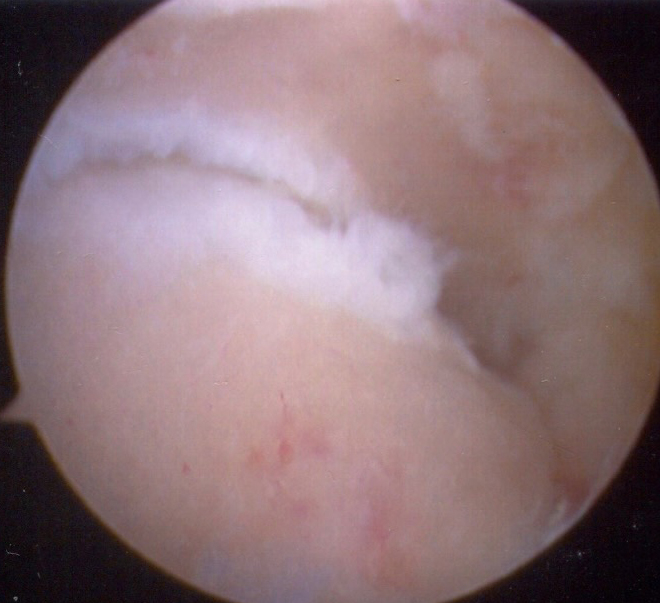
Post-debridement, ankle joint cleared
The location and nature of your ankle pain can provide valuable clues as to the underlying cause:

When to See an Ankle Specialist
As an ankle injury specialist, I see patients with a huge variety of symptoms around the ankle.
Ongoing pain after an ankle sprain
An ankle sprain occurs when the ligaments are stretched beyond their capacity during a twisting injury, but no bone fracture occurs. Most people have experienced simple ankle sprains that settle within days or weeks, these do not require any treatment unless they are occurring on a regular basis. However, as an ankle sports injury specialist, I see many patients in whom the pain after an ankle sprain does not settle in this time frame.
Why do I still have pain/ discomfort or instability after my ankle injury?
When ankle sprains don’t settle within the expected ankle injury recovery time, there’s usually an underlying reason requiring ankle pain consultation with a specialist. The initial pain usually relates to soft tissue and ankle ligament injury, but ankle pain not healing beyond a few weeks often indicates additional problems that occurred at the time of the original injury.
Cartilage damage can develop during the initial sprain, creating deep-seated chronic ankle pain that continues long after the ankle ligament injury should have healed.
Scar tissue that develops after a sprain can become trapped between the ankle joint surfaces at the extremes of movement, causing persistent ankle impingement syndrome.
Tendon injury around the ankle may also contribute to ongoing ankle pain symptoms.

Ankle instability

Ankle instability
Ankle Instability and Ankle Ligament Tears
Ankle instability is the tendency for your ankle to give way or give out.
Initially after an ankle injury, your ankle will feel insecure due to loss of proprioception – the feedback system that ensures muscles around the ankle work at the right time to prevent the ankle giving way if it rolls to the side. If this feeling of ankle instability continues beyond the acute healing phase, it may be due to chronic ankle pain from other problems like cartilage damage or ankle impingement syndrome, or because the ankle ligaments haven’t healed correctly (i.e. being too lax) to allow the proprioception feedback loop to work effectively.
What’s important to understand as an ankle surgery specialist is that ankle instability symptoms aren’t always related to ankle ligament injury. I frequently see patients who describe their ankle as unstable when the real problem is that the proprioception feedback loop has not been re-trained after the injury. Ongoing pain can prevent the feedback loop from working properly and leading to insecurity, i.e. the sensation that the ankle will give way. It is crucial to ensure that every effort has been made to retrain the proprioception feedback loop and ensuring there is no pain that is inhibiting this ‘system’ before considering ankle ligament reconstruction surgery.
Ankle Cartilage Defects
Cartilage defects in the ankle are areas of damage to the specialised lining covering the joint surfaces. Cartilage covers the surfaces of all joints, but unlike the knee, the ankle doesn’t have any shock-absorber cartilages (menisci); damage to the menisci in the knee can be much easier to treat then joint surface cartilage damage and it is important not to confuse the two.
In most cases, these defects occur following trauma – often during the same injury that caused an ankle sprain. However, some develop without clear traumatic cause, and whilst there are several theories about why this happens, the exact mechanism isn’t always certain.
Symptoms of cartilage defects include:
Many ankle injuries involve cartilage damage that settles with simple measures of rest, analgesia, and bracing, which is why not everyone undergoes specialist review and scans following ankle injuries. However, if you’re still experiencing symptoms three months after an ankle sprain, there’s probably a significant underlying reason, and cartilage defects are one of the potential causes.

Anterior Ankle Impingement
Anterior ankle impingement is a condition where soft tissue becomes trapped between the bones at the front of the ankle joint (the tibia or shin bone and the talus (the bone that moves up and down in the centre of the ankle) as the foot is forced upwards, causing pain either on the inner side (anteromedial) or outer side (anterolateral) of the front of the ankle.
Anteromedial ankle impingement usually develops in association with bony spurs on the front of the tibia and talus on the inner aspect. The spurs develop from repetitive minor trauma and are particularly common in footballers and dancers, though not all spurs lead to symptomatic impingement. These spurs can trap soft tissue, if the soft tissue is inflamed and thickened after an injury, creating a vicious circle.
Anterolateral ankle impingement typically occurs when inflamed or scarred soft tissue becomes thickened and trapped, usually without bony spurs present. The most typical ankle sprain is when the heel twists inwards injuring the ligaments and other sift tissues on the outside of the ankle which then become inflamed and swollen, making them more likely to getting trapped causing this type of impingement.
The characteristic symptom is pain at the front of your ankle when the foot is forced upwards – walking up or down hills, climbing stairs, or running. Like other ankle pain causes, this can create a sensation of instability or insecurity. The pain and any bony spurs present may also restrict ankle movement, causing noticeable stiffness.
Posterior Impingement
Posterior ankle impingement causes pain at the back of your ankle when the foot is forced downwards – the opposite movement pattern to anterior impingement. Pain occurs at the back of the ankle during activities that force the foot downwards – dancing en pointe, walking down hills or stairs, or running. As with other ankle pain causes, this can lead to a sensation of instability or insecurity.
This condition usually occurs when there’s an ‘extra bone’ at the back of the ankle called the os trigonum, this thought to be present in up to around a third of people. This additional bone becomes trapped at the back of the ankle during downward foot movement, making posterior impingement particularly common in ballet dancers who frequently work ‘en pointe’. The extra bone and the surrounding soft tissue can become inflamed, after an injury when the ankle is forced downwards suddenly. As with anterior impingement this creates a vicious cycle.
The flexor hallucis longus tendon (which passes to your big toe) lies immediately next to this extra bone, and irritation or damage to this tendon can produce similar symptoms. If the tendon is damaged or inflamed, you may experience pain and a cracking sensation when attempting to bend your big toe.
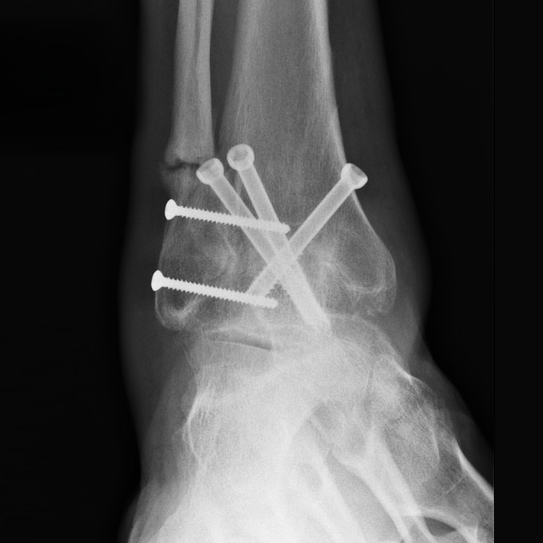
Ankle fusion (arthrodesis) – post-operative X-ray
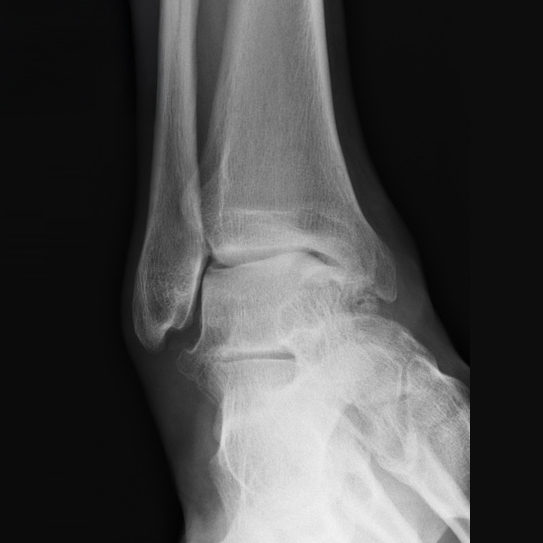
Ankle fusion (arthrodesis) – post-operative X-ray
Ankle Arthritis
Ankle arthritis is another significant cause of ankle pain that I treat at my private foot and ankle clinic. Ankle osteoarthritis is more likely to develop following a major injury or repetitive injuries to the ankle (post-traumatic ankle arthritis), but it can also occur without any preceding injury: some people are genetically more susceptible to arthritis. The cartilage that normally cushions the ankle joint gradually wears away, causing pain, stiffness, and reduced mobility. Many patients with ankle arthritis initially present with deep-seated pain, restricted movement, and difficulty with activities. If you’re experiencing progressive ankle pain with stiffness, particularly if you’ve had previous ankle injuries, ankle arthritis treatment may be required. I discuss ankle arthritis in detail here.
How I Diagnose Your Ankle Problem
Accurate diagnosis of the underlying problem is essential for successful treatment of ankle pain. When you consult me as an ankle pain specialist about ankle injury symptoms, I take a systematic approach to identifying the exact causes of ankle pain.
This will start with a clinical history – when the ankle pain started, whether you have suffered an injury, what activities aggravate it, whether there was a specific ankle ligament injury or ankle tendon injury, and how your ankle pain symptoms have evolved. What treatment you have had and whether they made any difference.
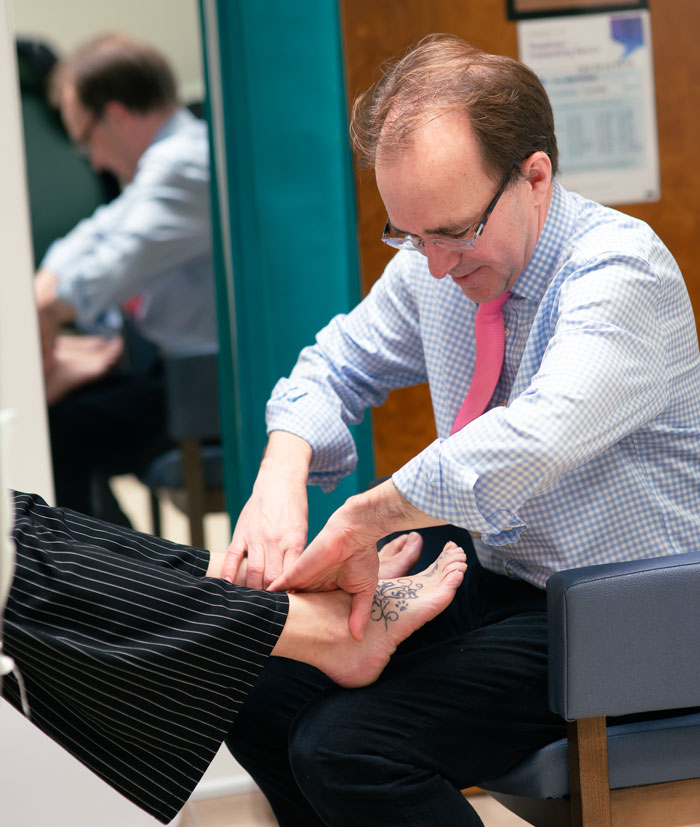
I will then examine your ankle thoroughly, assessing range of motion, ankle instability, areas of tenderness, and how the ankle responds to specific provocative movements that reproduce your ankle pain when walking or during activities.
Imaging investigations help confirm clinical findings and identify fractures, cartilage damage, ankle tendon injuries, ligament injuries and bone bruising that cannot always be detected through examination alone:
X-rays are useful for identifying bony spurs, fractures, and overall ankle alignment. Most simple ankle sprains don’t require X-rays, but if the ankle injury appears severe or there’s tenderness over the ankle bones, X-rays are useful to identify or rule out significant fractures.. Some subtle fractures don’t show on standard X-rays, which is why further investigation by an ankle injury specialist is needed when ankle pain symptoms persist.
MRI scans provide detailed images of soft tissues including ligaments, tendons, and cartilage. I request MRI when ankle pain after injury hasn’t settled within three months or when your ankle pain not healing suggests underlying problems. This form of imaging is used to confirm or rule out ankle cartilage defects, subtle fractures or bone bruising, ankle tendon injuries.
CT scans sometimes provide additional information about bony anatomy and can help surgical planning for complex ankle injury treatment.
Understanding exactly what’s causing your ankle pain allows me as your ankle specialist to recommend the most appropriate treatment options for your ankle pain or instability, whether that’s conservative management, ankle injection treatment, or surgical intervention.
Ankle Pain Treatment Options
Treatment always begins with the least invasive approaches, but when conservative ankle pain treatment (non-operative) doesn’t resolve your symptoms adequately, private ankle treatment through surgical intervention offers excellent outcomes for most ankle pain conditions.
Conservative (non-operative) Ankle Pain Treatment Approaches
For many ankle problems, particularly in the early stages, non-surgical ankle injury treatment can be highly effective:

The ankle arthroscopy procedure:
I make two small incisions on your ankle – typically one on the inside and one on the outside of the front of the ankle, if the problem is at the back of the ankle eg. posterior impingement, these two incisions will be at the back of the ankle.
Through these small incisions, I insert an arthroscope (telescope) that projects images onto a screen, giving me a detailed view of the entire joint. Using specialised instruments inserted through one or other of these incisions, I can remove scar tissue/ bony prominences causing ankle impingement syndrome and address cartilage defects causing chronic ankle pain.
The incisions are closed with non-dissolving sutures that are removed at your two-week follow-up appointment. Special dressings remain in place until this clinic review.

Recovery After Ankle Surgery
Ankle injury recovery time varies depending on the specific ankle surgery procedure performed, but I’ll provide clear guidance about what to expect following your private ankle treatment.
Immediate Post-Operative Period
Weight-Bearing and Mobility After Ankle Surgery
Your weight-bearing restrictions and ankle injury recovery time depend on whether cartilage surgery was performed:
After cartilage defect treatment:
After arthroscopy for other conditions:
Ligament reconstruction surgery:
Rehabilitation Exercises following arthroscopic ankle surgery
Understanding the Risks
All surgery carries some risk, and I believe in ensuring you’re fully informed before proceeding.
Taking the Next Step – Ankle Injury Treatment Near Me
If you’re experiencing persistent ankle pain, ankle instability, or chronic ankle pain affecting your quality of life in the Southampton, Portsmouth, Chichester or South Downs area, I encourage you to seek ankle specialist appointment for proper ankle pain diagnosis and ankle pain treatment options.
As a private ankle surgeon and foot and ankle surgeon serving Hampshire and West Sussex, I provide comprehensive ankle injury treatment at my private foot and ankle clinic. During your initial ankle surgeon consultation, I’ll examine your ankle thoroughly, review any imaging you’ve already had, and determine the most appropriate further investigation, if required, and ankle pain treatment plan for your specific ankle condition be that an ankle ligament injury, ankle tendon injury, ankle impingement syndrome, or other ankle condition.
Whether it is conservative (non-operative) treatment eg. physiotherapy, targeted ankle injection treatment, ankle arthroscopy for pain, ankle ligament reconstruction surgery, ankle impingement surgery, or ankle tendon repair surgery, you’ll have all the information needed to make informed decisions about your private ankle treatment.
Understanding what’s causing your ankle pain is the first step toward effective ankle pain treatment. With modern arthroscopic techniques and evidence-based ankle injury treatment approaches at my private foot and ankle clinic in Southampton, Portsmouth and Chichester, I can help you achieve the pain-free, stable ankle function you deserve as the best ankle surgeon for your needs.
Private ankle treatment at my private foot and ankle clinic offers several advantages: rapid access to ankle specialist assessment to ensure early diagnosis e.g cartilage damage, ligament or tendon injury and focused treatment. It will also allow prompt private ankle surgery if required, scheduled at your convenience, comprehensive post-operative physiotherapy for optimal ankle injury recovery time, and the continuity of care that comes from seeing the same ankle surgery specialist throughout your ankle injury treatment journey.

Taking the Next Step – Ankle Injury Treatment Near Me
If you’re experiencing persistent ankle pain, ankle instability, or chronic ankle pain affecting your quality of life in the Southampton, Portsmouth, Chichester or South Downs area, I encourage you to seek ankle specialist appointment for proper ankle pain diagnosis and ankle pain treatment options.
As a private ankle surgeon and foot and ankle surgeon serving Hampshire and West Sussex, I provide comprehensive ankle injury treatment at my private foot and ankle clinic. During your initial ankle surgeon consultation, I’ll examine your ankle thoroughly, review any imaging you’ve already had, and determine the most appropriate further investigation, if required, and ankle pain treatment plan for your specific ankle condition be that an ankle ligament injury, ankle tendon injury, ankle impingement syndrome, or other ankle condition.
Whether it is conservative (non-operative) treatment eg. physiotherapy, targeted ankle injection treatment, ankle arthroscopy for pain, ankle ligament reconstruction surgery, ankle impingement surgery, or ankle tendon repair surgery, you’ll have all the information needed to make informed decisions about your private ankle treatment.
Understanding what’s causing your ankle pain is the first step toward effective ankle pain treatment. With modern arthroscopic techniques and evidence-based ankle injury treatment approaches at my private foot and ankle clinic in Southampton, Portsmouth and Chichester, I can help you achieve the pain-free, stable ankle function you deserve as the best ankle surgeon for your needs.