Flat Foot

Mr Billy Jowett | Consultant Orthopaedic Surgeon

Expert Private Treatment for Adult Acquired Flatfoot Deformity

Struggling with Painful Flat Feet?

If you’ve been told you have flat feet and are experiencing pain, you’re not alone. As a consultant orthopaedic foot and ankle surgeon specialising in flat foot reconstruction, I see many UK patients who’ve been struggling with painful flat feet for years, often told to “just live with it.” But here’s what I want you to know: painful flat feet are different from simply having flat arches, and there are excellent treatment options available, both surgical and non-surgical.

I work primarily with private patients across the UK, accepting self-pay patients as well as those with private medical insurance including Bupa and AXA. You don’t need a GP referral to see me privately – you can book directly for an expert assessment.

What is a Flat Foot?

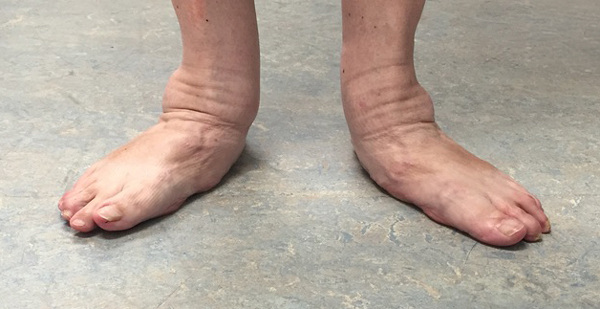
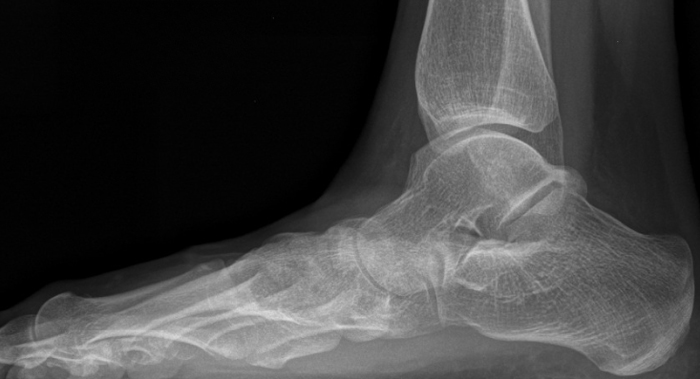
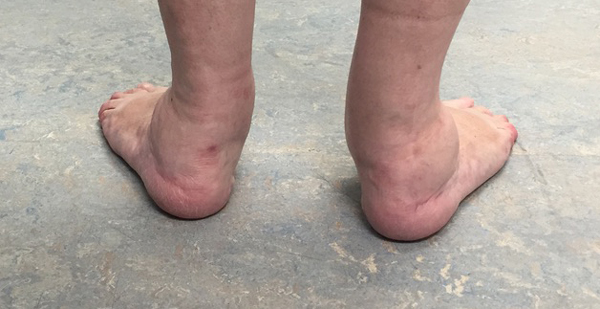
A flat foot is exactly as it suggests: on the inner aspect of the foot, there’s normally an arch stretching from the heel to the base of the toes. This ‘medial longitudinal arch’ develops through childhood, with the height varying amongst individuals. Some people never develop a medial arch, while others may develop a fallen arch as they age.
Can Flat Feet Be Corrected in Adults?

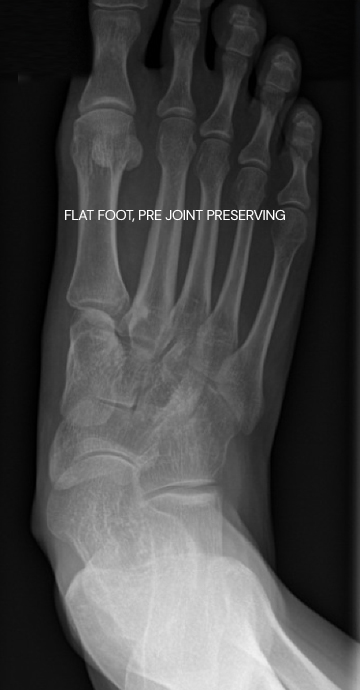
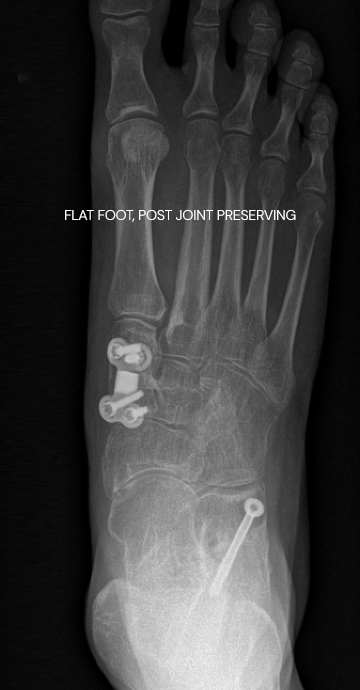
This is one of the most common questions I’m asked, and the answer is yes – adult flat feet can absolutely be corrected. The type of correction depends on the cause of your flat foot and how far the condition has progressed. I offer both joint-preserving flat foot reconstruction and fusion procedures, depending on what’s most appropriate for your specific situation.
What is Adult Acquired Flatfoot Deformity?

Adult acquired flatfoot deformity (AAFD), also known as posterior tibial tendon dysfunction (PTTD) or ‘fallen arches’, is quite different from the flat feet you might have been born with. This condition develops later in life, and I tend to see two patterns in my UK private practice:

The first type: Patients who have always had slightly flat feet, but suddenly they’ve started to hurt and collapse further. This happens when the supporting structures can no longer cope with the strain they have been under for years.

The second type: Patients who have had relatively normal feet, but then the medial longitudinal arch starts to lower. This is more common in middle-aged women, possibly related to hormonal changes and ligamentous laxity.

Both presentations share a common feature: the failure of a critical tendon called the tibialis posterior tendon. I feel these patients can get a rather raw deal, because this condition can go undiagnosed and therefore untreated and more recently there has been a move for podiatrists (who provide the mainstay of treatment of the early stages of the acquired adult flat foot) in the NHS to focus on the treatment of diabetic feet and therefore access to orthotics has become more difficult.

Why Do Flat Feet Develop in Adults?

Understanding what’s happening in your foot helps explain why treatment works. The main cause is:

The tibialis posterior tendon is one of your foot’s main arch supporters. It works by pulling the navicular bone (just in front of your ankle) inward, which rotates several joints at the back of your foot. When these joints rotate properly and your heel comes inward, they lock on top of each other, making your foot rigid so your Achilles tendon can lift your heel efficiently when you walk.

When this tendon fails, more load is placed on the ligamentous structures of the foot, in particular the spring ligamentTogether, these failures allow your foot to roll inward and your heel to drift outward. Pain often occurs behind the inner ankle before the arch starts to drop visibly. Over time, abnormal forces going through your ankle joint can lead to arthritis.

There are many theories as to the underlying cause of tibialis posterior tendon dysfunction and therefore the cause is likely to be individual and may be multifactorial, including:

  • Trauma
  • Inflammatory arthropathy
  • Vascular compromise due to the anatomy of the blood supply, variations in people with obesity and hypertension as well as diabetes and steroid use (oral and directly injected)
  • Repetitive stress on the tendon due to an underlying flat foot
  • The presence of an accessory navicular (an extra bone at the insertion of the tendon into the medial pole of the navicular (the bone just in front of the ankle).
  • Superficial calf muscle tightness is often present in association with an acquired adult flat foot and in most cases is probably secondary to the deformity but in a flat foot calf tightness will increase the load placed on the tibialis posterior tendon

Tarsal coalition: in some people there may be a long-standing link between the bones of the foot in association with a flat foot, often one that is rigid i.e. even with manipulation it is not possible to recreate the medial arch of the foot. This is often picked up in teenagers following an ankle sprain, While this connection often doesn’t cause problems initially, it can lead to pain.

The term ‘flexible flatfoot’ a common foot shape we see in in a child’s foot. It refers to an arch that flattens when you stand, but the foot arch reforms when you sit or go up on your toes. This type usually doesn’t cause problems.

Adult Acquired Flatfoot Deformity (AAFD) develops later in life and gets progressively worse. It typically happens when the posterior tibial tendon (which supports your arch) weakens or becomes damaged. Over time, your arch gradually collapses and may become stiff and painful, even when resting.

Sometimes AAFD develops if you have always had flexible flatfeet and the tendon wears out.

Do I Need Flat Foot Surgery? Recognising Flat Feet Symptoms and Signs

Not all flat feet need treatment, although one could make an argument that it would be sensible to wear supportive shoes with or without supportive insoles (orthotics) if you have flat feet to reduce the stress on the tibialis posterior tendon to reduce the chance of problems with the tibialis posterior tendon.

Formal treatment is required if you develop pain particularly if it is affecting your function/ day-to-day life.
pain often occurs behind the inner aspect of the ankle before the arch starts to drop visibly, the pain in this area can persist or sometimes stop once the foot has flattened significantly.

Once the foot has become flat, pain may develop on the outer aspect of the ankle where soft tissue becomes trapped between the side of the heel bone (calcaneus) and the thinner bone on the outside of the ankle (fibula).

If you have had a flat foot for a long time you can develop arthritis on the outer aspect of your ankle.

It may feel as if your foot or ankle is going to give way, or it might actually do so. This can occur due to pain, but may also happen because the tibialis posterior tendon is failing and losing its ability to support the medial arch of the foot.

In the case of tibialis posterior tendon dysfunction, the medial arch of the foot gradually flattens, hence “flat foot.”

You might notice your shoes wearing unevenly, particularly increased wear of the inner aspect of the heel of the shoe.

Shin splints– Having flat feet can increase your risk of shin splints. When your arch is low the back of the foot tends to roll inward excessively as you walk or run (a movement called overpronation). This creates additional strain on the tibialis posterior tendon, and this can cause pain where the tibialis posterior muscle originates from the tibia (the main bone of the lower leg.

This is an excellent question. When your foot rolls over abnormally, it doesn’t just affect your foot – it changes the entire alignment of your leg. Abnormal forces go through your ankle joint if the foot remains flat and unsupported, which can lead to ankle arthritis over time.

The altered mechanics can also affect your knee, hip, and even back alignment. Many patients report improvement in knee pain with orthotics or after successful flat foot reconstruction. It is important to be aware that when you undergo flat foot correction surgery it should be for the foot pain and improvements elsewhere are a beneficial side effect rather than a guaranteed outcome.

Take it seriously if: You have painful flat feet, particularly if the pain is on the outer aspect of your foot/ ankle.

Flat Foot Treatment: Orthotics vs Surgery – Which Do You Need?

I always start with conservative treatment when possible. Many patients can manage their symptoms successfully without surgery, and it’s important to explore these options thoroughly before considering operative treatment.

Supportive shoes, particularly those with good arch support and laces, often help significantly.

Custom orthotics can be very beneficial in adult flat foot caused by tibialis posterior tendinopathy as long as the foot remains flexible. While it’s possible to buy them over-the-counter, custom-made orthotics fitted by a podiatrist are likely to be more effective, thinner, and fit more easily into shoes.

Over-the-counter arch supports often don’t help much because they simply build up underneath the arch. If your foot’s rolling onto them, they just create a physical obstacle to try to stop the foot rolling over that can be quite painful. What you actually need are orthotics designed to tilt your heel, to stop it rolling inwards.

The rationale is this: since your tibialis posterior tendon isn’t doing its job of controlling the back of the foot, the orthotic needs to do it instead. These custom-made orthotics will have a heel wedge i.e. a build up under the inner aspect of the heel to stop the heel tilting inwards, once the orthotic has performed this function it is possible for an arch support to do so without causing excessive pressure under the inner aspect of the foot.

Physiotherapy (aka physical therapy) with strengthening and stretching exercises can be useful in flat feet where the cause is tibialis posterior tendinopathy. A targeted exercise program can help support the tendon and improve foot mechanics.

If orthotics aren’t sufficient, we can use a Richie brace or similar ankle-foot orthosis. These hold both the back of the foot and the ankle in position, useful when the foot is rolling over to a degree that orthotics alone can’t control.

These can help manage symptoms, however it’s important to remember that they can interact with other medication you’re taking, and you may need to check with your doctor about which you can take safely.

When Should You Consider Flat Foot Surgery?

This is where I need to be philosophical with you. The timing of surgery comes down to your symptoms rather than some arbitrary staging system. Even if you have advanced flat foot deformity, if you can manage with orthotics and bracing and maintain your quality of life, there may be no rush for surgery.

However, if conservative measures aren’t controlling your symptoms adequately, or if the deformity has progressed beyond what bracing can manage, then it’s time to consider surgery.

Key indicators include:

  • Persistent pain despite properly fitted orthotics and appropriate footwear
  • Progressive deformity that’s no longer controllable with bracing
  • Significant functional limitation affecting your quality of life

Important considerations:

  • If the back of the foot remains in a ‘rolled over’ position i.e. in a flat foot posture then the joints can become fixed in that position, which would alter the operation required to correct the position of your foot. Instead of joint-preserving reconstruction, you may need triple arthrodesis (fusion surgery).
  • If the foot remains in a ‘rolled over’ position which is not controlled/ corrected by orthotics, this can lead to arthritis developing in the outside of the ankle which may then require additional surgery such as an ankle replacement.

So, while I don’t believe people necessarily “leave it too late,” I do think timely assessment is important. Even if you’re not ready for surgery, getting proper orthotics fitted can prevent the progression that would limit your surgical options later.

What Does Flat Foot Reconstruction Surgery Involve?

As one of the UK’s specialist surgeons for flat foot reconstruction, let me be direct about one thing: simple tendon procedures alone, in my opinion, don’t work for established flat feet. Some surgeons transfer tendons to shore things up, but here’s why I take a more comprehensive approach:

The Standard Reconstruction: Tibialis Posterior Tendon Reconstruction (Joint-Preserving Surgery)

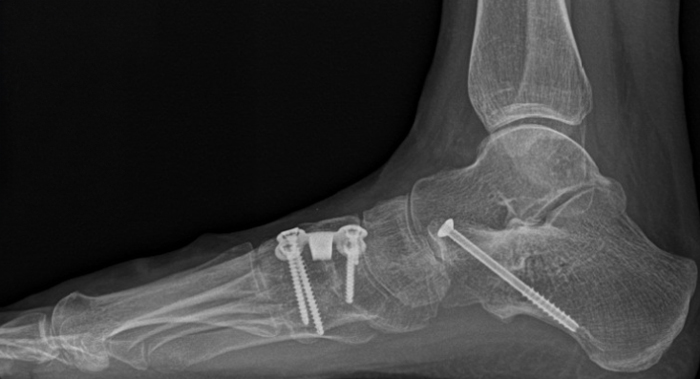
For most flat feet that haven’t become rigid, I perform what’s called a joint-preserving flat foot reconstruction. This is the gold-standard treatment for adult acquired flatfoot deformity in the UK and typically involves some or all of these four elements:

The abnormal tibialis posterior tendon is inspected and the damaged area (usually the whole tendon) is removed. The flexor digitorum longus (FDL) tendon, which passes down to the second to fifth toes, is then identified and transferred to the navicular bone where the tibialis posterior tendon normally inserts, to replace it.

The FDL tendon can be used to replace the tibialis posterior tendon because there is usually a link further down in the foot connecting it to the tendon that bends the big toe (FHL), so even after the FDL tendon has been transferred, you’ll still be able to bend all of your toes. It (the FDL tendon) is secured to the navicular through a hole made in the bone, either by stitching it back onto itself or using a special interference screw or anchor.

Since the tibialis posterior tendon has failed with the foot in that position, research shows it rarely fails alone – the spring ligament typically fails too. I reconstruct this ligament as part of the procedure, either by tightening it alone or supporting it with an ‘Internal Brace’ (suture tape attached to anchors which are inserted into the bone at either end of the spring ligament).

The heel bone is cut towards the back making a cut on the outside, usually a small (keyhole) incision and the bone is shifted medially (towards the inside) or in more significant deformity, a larger incision is made and the bone is is cut further forward and bone graft is inserted thus lengthening the outside of the foot (lateral column lengthening). This gives the transferred tendon a mechanical advantage.

This step is crucial because the FDL is weaker than the tibialis posterior. If I put a weaker tendon muscle unit in without changing the mechanics, it is likely to fail as well.

Your foot works like a tripod – the heel is one point, and the first and fifth metatarsal heads form the other two points. As the heel rolls over and the tibialis posterior fails, the first metatarsal often lifts up to accommodate this (supination of the forefoot to compensate for hindfoot pronation).

When I put the heel back in the right position (via the calcaneal osteotomy), the inner front part of the tripod may be up in the air. The Cotton osteotomy is an opening wedge procedure on the medial cuneiform bone that brings the inner aspect of the foot back down to the ground.

The calf muscle is assessed for tightness, as is the shape of the rest of the foot. Calf muscle tightness is strongly linked to flat foot problems. If your calf muscle is tight, it pulls the heel bone outward, which allows the midfoot to roll inwards.

Alternatively, if your foot goes flat, the distance between your heel and the back of your knee shortens, and the calf muscle naturally tightens.

Essentially a tight calf muscle is a deforming force in the development or persistence of a flat foot. When I move the heel back into the correct position, I often need to lengthen either part of the calf muscle (gastrocnemius release) or the Achilles tendon.

This might sound like the “smorgasbord” approach, but each element addresses a specific mechanical problem. The recovery from adding a Cotton osteotomy or calf muscle lengthening doesn’t significantly change the overall rehabilitation timeline.

Triple Arthrodesis Flat Foot Surgery UK

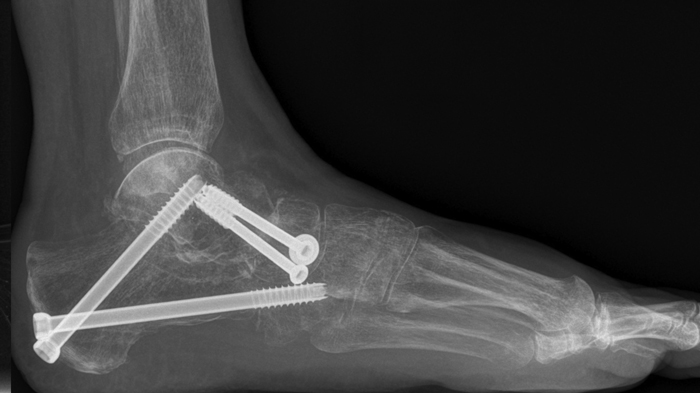
If your flat foot has become rigid, or if arthritis has developed in the talonavicular, subtalar, and calcaneocuboid joints, I can’t preserve the movement in these joints. Instead, I perform a triple arthrodesis, fusing these three joints in a corrected position, the joint surfaces are prepared in a way that should allow them to join together (fuse) (and removes any arthritis present in these joints), and they are fixed typically with screws and staples.

While this eliminates some motion, it restores proper alignment and eliminates pain from arthritic joints. Many patients function very well after triple arthrodesis and find the trade-off of some lost motion for pain relief and stability to be well worthwhile.
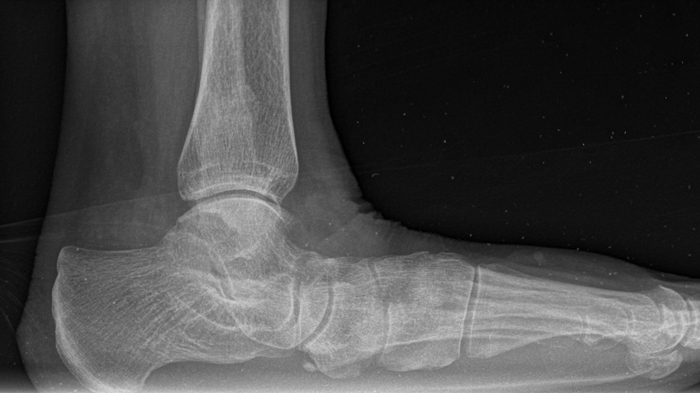
Advanced Cases with Ankle Arthritis

In the most advanced cases where ankle arthritis has developed alongside the flat foot deformity, I may need to perform ankle replacement surgery at a separate sitting after performing the flat foot correction. This addresses both problems in the corrected foot position.

Tarsal Coalition Surgery

This is a separate topic as it is not part of the classical acquired adult flat foot deformity. If there’s a coalition (link between the bones) present that has become painful and hasn’t settled with non-operative management sometimes the coalition can be excised, in other situations the heel bone is reset (calcaneal osteotomy: see above) to decrease the forces causing stress on the coalition.

What Our Patients Say

Needs new testimonial here

“I suffered for a long time in a lot of pain with a bunion and a shortening of ligaments in another toe. Mr Jowett operated on both of these and I am no longer in pain and back on the golf course pain free.”

Verified patient, Spire Southampton Hospital

Understanding Flat Foot Stages

You may have heard about staging systems for flat feet (typically stages 1-4). While these don’t dictate the timing of my surgery recommendations – symptoms do that – they do influence which surgical procedure is most appropriate:

Stage 1: Tibialis posterior tendinopathy without deformity

Stage 2: Flexible flat foot deformity (further divided into 2a, 2b and 2c based on degree of forefoot deformity and correctability) – treated with joint-preserving reconstruction

Stage 3: Rigid flat foot or one with arthritis in the triple joint complex (the subtalar, talonavicular and calcaneocuboid joint, those under and just in front of the ankle that work together to move the back of the foot inwards and outwwards) – requires triple arthrodesis

Stage 4: Flat foot with ankle arthritis – needs foot reconstruction combined with ankle replacement

Various classification systems exist, and new ones are always being proposed, but this framework gives you a sense of how progression affects treatment options.

How Long is Recovery After Flat Foot Surgery, and When Can I Walk Again?

I believe in being realistic with my patients about flat foot surgery recovery time. This isn’t about creating a bionic foot – it’s about pain relief, improved function, and preventing further deterioration. Here’s what you can expect during your flat foot reconstruction recovery in the UK:

Immediately After Surgery:

Usually a general anaesthetic is required, along with a popliteal nerve block (local anaesthetic placed around the knee close to the nerves that provide sensation to your ankle and foot). This means your foot and ankle are likely to be numb when you wake after surgery – this lack of sensation usually lasts between 12 and 24 hours.

Special dressings will be placed on the ankle and a plaster back slab will be applied. These are all left in place until you are reviewed in clinic at two weeks following the operation. The plaster should be kept dry; a waterproof cover when showering is useful for example a ‘Limbo’.

Going Home: This is usually the morning following surgery, depending on how easy you find using crutches and your home situation (number of stairs, etc.).

Pain Relief: The local anaesthetic ankle should provide some initial pain relief, but you will be supplied with pain-relieving tablets (usually co-codamol or paracetamol and tramadol). These should be taken regularly initially, then gradually reduced after a couple of days as your pain allows. You should avoid non-steroidal anti-inflammatory tablets (e.g., Nurofen) as these could stop the bones from joining.

You will find it more comfortable to keep your foot elevated above the level of your hip , as much as you can for the first two weeks after surgery (roughly 45 minutes out of every hour). This helps reduce swelling and promotes wound healing.

Weight-Bearing Timeline:

  • Weeks 0-6: No weight-bearing at all
  • Weeks 6-12: Gradual increase to full weight-bearing in a removable boot.
    You’ll be referred to a physiotherapist to start exercises during this time.

Follow-Up Appointments:

  • 2 weeks after surgery: Dressings, plaster, and sutures removed; new plaster fitted
    6 weeks after surgery: Plaster changed to a pneumatic walking boot
    12 weeks after surgery: X-ray taken; if satisfactory, you can remove the boot
  • Six months after surgery: to assess your progress, evidence suggests that there will be some improvement in your symptoms and activity level up to a year after surgery.

Return to Work (Approximate):

  • Office job – 6 weeks
  • Mobile job requiring driving – 12-14 weeks
  • Manual labour – 4-5 months


The recovery timeline for triple arthrodesis is similar to FDL transfer surgery:

Weight-Bearing:

  • Weeks 0-6: No weight-bearing
  • Weeks 6-12: Gradual increase to full weight-bearing in plaster or removable boot

Follow-Up Schedule:

  • 2 weeks: Dressings, plaster, and sutures removed; new plaster applied
    6 weeks: Plaster changed to weight-bearing plaster or walking boot
    12 weeks: X-ray taken; if satisfactory, you can remove the boot
    6 months: Further follow-up to assess your progress, evidence suggests there will be improvement in your symptoms and activity up to a year after surgery.

Return to Driving:

If the surgery is on your left ankle and you have an automatic car, you may be able to drive two weeks after surgery, but you should check with your insurance company first.

If the surgery is on your right ankle, you won’t be able to drive until you can walk without crutches (or boot/plaster) confidently. Check that you can place your foot on the pedal with sufficient force to do an emergency stop without pain in a stationary car, then contact your insurance company to ensure they’ll provide cover. You will also need to check whether you need to contact the DVLA having not driven for three months.

Return to Work (Triple Arthrodesis):

  • Office job – 6 weeks
  • Mobile job requiring driving – 12-14 weeks
  • Manual labour – 5-6 months

What Can You Expect Long-Term?

After comprehensive flat foot reconstruction (including procedures like calcaneal osteotomy, Cotton osteotomy, and calf release), here’s what I typically tell patients:

You should expect to: Walk reasonable distances comfortably, cycle, swim, and possibly run short distances.

Don’t expect to: Return to marathon running or high-impact activities.

That said, the majority of people who come to see me needing this level of reconstruction haven’t been able to run or exercise much for quite a while, so for most patients, the improvement in function is substantial. Most patients find the improvement in pain and function well worth the recovery period.

What Are the Risks and Complications of Flat Foot Reconstruction?

As with any surgical procedure, it’s important to understand the potential risks. I believe in having honest conversations with my patients about what could go wrong, even though the vast majority of my flat foot reconstruction surgeries go smoothly without complication.
Infection: There’s always a small risk of infection with any surgery. We take extensive precautions with sterile technique and prophylactic antibiotics (i.e. given at the time of the surgery).

Nerve Damage: The foot has many small nerves running through it. While I take great care to protect these during surgery, there’s a small risk of temporary or, rarely, permanent numbness or altered sensation in parts of the foot, if the nerve is damaged or gets caught in scar tissue it can cause ongoing pain.

Blood Clots (DVT (deep vein thrombosis: clot in the leg) /PE (pulmonary embolism: clot on the lung)): Any surgery involving the lower limb carries a risk of blood clots. We use appropriate prophylaxis (i.e. blood thinning injections) based on your individual risk factors. These may reduce the risk but will not take the risk to zero. It is therefore important you tell me or contact the hospital if you develop calf pain or shortness of breath after the surgery.

Ongoing Pain: While the goal is pain relief, some patients may experience ongoing discomfort. This is usually much improved compared to pre-surgery, but it’s important to have realistic expectations. There are a variety of causes for this eg. nerve damage, the bones not joining (non-union: see below) and chronic pain: the nerves misfiring and telling you something is wrong even though there is no obvious cause, this happens more after hand surgery than foot surgery.

Need for Further Surgery: In some cases, additional procedures may be needed (either due to general problems or those specific to flat foot reconstruction surgery). This could be due to incomplete or over correction, non-union of bones (failure to heal), or progression of arthritis in adjacent joints.

Non-union: The cut bones (osteotomies) may not heal properly or the joints fail to join un after a triple fusion. This is why we avoid anti-inflammatory medications during healing and emphasize the importance of non-weight-bearing during the initial recovery period.

Over- or Under-correction: While I aim for optimal alignment, there’s always some degree of variation in how the foot settles after surgery.

Stiffness: Some loss of motion is expected, particularly with triple arthrodesis. Even with joint-preserving surgery, some stiffness in adjacent joints can occur.

Wound Healing Issues: The foot can be challenging for wound healing, particularly in patients with diabetes, poor circulation, or who smoke and therefore these issues will need to be considered/ addressed before surgery.

During your consultation, we will discuss your individual risk factors and I’ll answer any questions you have about these potential complications. The benefits of surgery typically far outweigh the risks for appropriately selected patients.

What is the Best Flat Foot Surgery UK?

Patients often ask me what the “best” flat foot surgery is. The truth is, there’s no single answer – the best flat foot surgery for you depends entirely on your specific condition, the stage of your deformity, your activity goals, and whether your joints are still flexible or have become rigid.

Joint-preserving flat foot reconstruction is typically the best option. This comprehensive approach addresses all the mechanical problems: failed tibialis posterior tendon (replaced with FDL transfer), failed spring ligament (reconstructed), heel malalignment (corrected with calcaneal osteotomy), forefoot supination (corrected with Cotton osteotomy if needed), and tight calf muscles (lengthened as required). This preserves motion while correcting alignment.

Triple arthrodesis remains the gold standard. While it eliminates motion in three joints, it provides excellent pain relief, permanent correction, and predictable results. Many patients function very well after triple arthrodesis.

The best flat foot surgery is one that:

  • Addresses ALL the mechanical problems, not just the tendon
  • Is appropriate for your specific stage and flexibility of deformity
  • Provides lasting correction and pain relief
  • Allows you to return to your desired activities
  • Is performed by an experienced specialist foot and ankle surgeon
  • Comes with realistic expectations about recovery and outcomes

Beware of surgeons offering isolated tendon transfers without bone realignment procedures – in my experience these have high failure rates. Comprehensive reconstruction with calcaneal osteotomy is essential for lasting results.

My Approach to Flat Foot Problems: Specialist UK Orthopaedic Foot and Ankle Surgeon

As a foot specialist, I provide expert assessment and treatment for flat foot problems across the UK, with a particular focus on serving patients across the South Downs (e.g Hampshire and West Sussex) as well as Jersey.

I perform a comprehensive reconstruction when needed, addressing all mechanical problems simultaneously rather than taking a piecemeal approach. I offer the full range of modern techniques, from joint-preserving reconstruction and fusion surgery, with clear, honest communication about all your options.

I work primarily with private patients who want rapid access to specialist care without NHS waiting times. I accept private medical insurance (Bupa, AXA, Aviva, Vitality, WPA, and others) as well as self-funding patients. You don’t need a GP referral to book a consultation.

Whether you’re seeking a second opinion, exploring surgical options, or need expert orthotic guidance, I take time to understand your individual circumstances, activity goals, and treatment preferences. I work with local physiotherapists to ensure comprehensive rehabilitation support throughout your recovery.

Frequently Asked Questions About Adult Flat Foot Surgery

What Our Patients Say

Needs new testimonial here

“I suffered for a long time in a lot of pain with a bunion and a shortening of ligaments in another toe. Mr Jowett operated on both of these and I am no longer in pain and back on the golf course pain free.”

Verified patient, Spire Southampton Hospital

Take the Next Step Towards Pain-Free Walking

If you’re living with painful flat feet, don’t accept it as something you simply have to put up with. Early specialist assessment can prevent progression, protect your joints, and give you clarity about your treatment options — whether that’s expert orthotic guidance or advanced reconstructive surgery.

You don’t need a GP referral to book privately. I welcome both self-pay and insured patients, including Bupa, AXA, Aviva, Vitality and WPA.

Get in touch:

+44 (0) 7856 853175